
Economy
NPERA Takes Over Port Economic Regulation, Promises End to Tariff Uncertainty

NPERA Takes Over Port Economic Regulation, Promises End to Tariff Uncertainty
The Nigeria Ports Economic Regulatory Agency (NPERA) has formally commenced operations, taking full responsibility for the economic regulation of Nigeria’s ports in a major reform aimed at improving transparency, competition and efficiency across the maritime sector.
The new agency was established following President Bola Ahmed Tinubu’s assent to the Nigeria Ports Economic Regulatory Agency Act, 2026, ending the Nigerian Shippers’ Council’s tenure as the country’s interim port economic regulator.
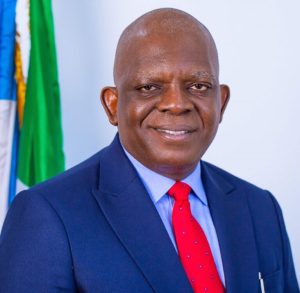
Chairman of the NPERA Governing Board, Dr. Ibrahim Shema, described the development as a “fundamental reform” of Nigeria’s port governance, saying it marked the culmination of nearly five decades of efforts to establish a permanent framework for port economic regulation.
The Nigerian Shippers’ Council, established in 1978, was designated as the interim Port Economic Regulator in 2014 following the concessioning of port terminals.
Under the new arrangement, NPERA will regulate port tariffs and charges, licensing, service standards, fair competition, commercial disputes, trade facilitation and protection of port users.
Shema stressed that the emergence of NPERA would not create rivalry with the Nigerian Ports Authority (NPA), which remains responsible for port infrastructure and its landlord functions.
“This is not about creating competing authorities. It is about establishing a coherent system in which institutions work together, each within its statutory responsibilities,” he said.
He said NPERA would prioritise transparency, fairness, predictability, efficiency and accountability, while reducing unnecessary regulatory barriers and uncertainty that could hinder cargo movement and investment.
Shema also promised stronger digital systems for licensing, tariff administration, regulatory monitoring, compliance and stakeholder engagement, as well as more accessible mechanisms for resolving commercial disputes.
He assured stakeholders that the transition from the Shippers’ Council to NPERA would be orderly, with appropriate attention to personnel, assets, liabilities, existing contracts, pending disputes, regulatory records and licensing arrangements.
Also speaking, NPERA Executive Secretary/CEO, Dr. Pius Akutah, expressed confidence that the agency would significantly clarify Nigeria’s port regulatory environment within the next one to two years.
According to Akutah, NPERA will promote fair pricing and competition, improve trade facilitation, strengthen government revenue and provide stronger protection for port users.
The agency’s commencement effectively separates economic regulation from port infrastructure and landlord functions, creating a dedicated institution to oversee the commercial and competitive aspects of port operations.
The new framework is expected to provide port users and operators with greater certainty over tariffs, charges, licensing and service standards.
However, the real test for NPERA will be whether it can translate its new statutory powers into faster cargo clearance, improved port efficiency, reduced costs and greater investor confidence in Nigeria’s maritime sector.