
Shipping News
CVFF: $25m Can Acquire Ships If Backed by Cargo, Trade Contracts

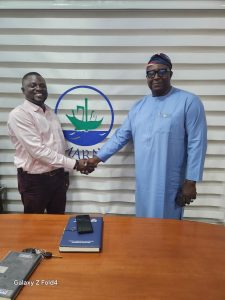
CVFF: $25m Can Acquire Ships If Backed by Cargo, Trade Contracts — Shipowner
A foremost Nigerian shipowner and former Chapter President of the African Shipowners Association (ASA), Captain Ladi Olubowale, has said the $25 million financing available under the Cabotage Vessel Financing Fund (CVFF) could be enough to acquire a sizeable vessel, provided the investment is backed by identifiable cargo and firm long-term trade contracts.
Olubowale made the assertion at the Maritime Reporters Association of Nigeria (MARAN) Roundtable on Monday, stressing that the success of the CVFF should not be judged solely by how much individual shipowners receive, but by whether the financing is linked to viable commercial opportunities.
According to him, guaranteed cargo and long-term contracts would give beneficiaries the revenue needed to operate their vessels and repay the financing.
He noted that the Nigerian Maritime Administration and Safety Agency (NIMASA) had indicated that applicants would be expected to provide about $3.7 million in equity to access financing of up to $25 million.
“NIMASA wants you to bring out $3.7 million in order for you to be able to attract $25 million. They will now look at it in your own case. What trade will you be using that for?” he said.
Olubowale explained that the proposed financing should be viewed alongside the specific trade a vessel would serve, noting that different categories of cargo require different types of vessels.
He urged the government and industry stakeholders to first identify the volume and nature of cargo available in Nigeria before matching such cargo with appropriate vessels for CVFF financing.
Using dry cargo, cement and other commodities as examples, the shipowner said operators should acquire vessels specifically suited to the trades they have secured, rather than purchasing ships without established commercial demand.
He maintained that a $25 million facility could support the acquisition of a vessel dedicated to a particular trade, especially where a one- or two-year contract guaranteeing cargo is already in place.
Olubowale said revenue generated from such contracts could provide a reliable source for servicing and repaying the financing, thereby reducing the risks associated with vessel acquisition.
He also called for the CVFF to be integrated into a broader national fleet development strategy rather than being treated merely as a financing scheme for individual shipowners.
According to him, with an estimated $700 million currently available in the fund, Nigeria has an opportunity to develop a national fleet capable of serving different cargo segments if the resources are strategically deployed with the input of experienced maritime professionals.
“Most of this shipping does not require a big capital. It requires you have a 10 per cent deposit as long as you trade to cover up that money,” he said.
The shipowner further disclosed that several banks had approached his company on the CVFF, with some already presenting term sheets outlining financing requirements, equity contributions and other conditions.
He said this represented a significant departure from previous years when Nigerian shipowners frequently complained about difficulties and delays in accessing the fund.
Olubowale maintained that the immediate priority should be to ensure that the CVFF produces measurable economic benefits by expanding Nigeria’s indigenous fleet, creating opportunities for local shipowners and enabling Nigerian operators to capture a greater share of the nation’s maritime trade.